
AI vision solution
AI visual inspection: every product checked
Manual visual inspection is a sample: a fraction of the products, judged by people who get tired. With AI visual inspection, a camera with a trained AI model judges your entire production, at production speed. Every product is checked for scratches, dents, contamination and assembly errors before it leaves the factory, and every check is recorded.
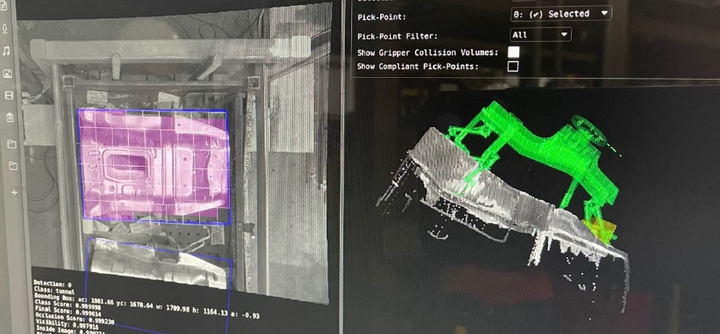
Manual visual inspection runs into limits
In many manufacturing companies quality control is still human work: an operator or inspector judges products by eye, often as a sample. That works, until the number of products, variants or quality requirements grows. Then the same problems keep coming back, and automating visual inspection becomes the logical next step.
Research on visual inspection also shows that even trained inspectors catch about 80% of defects in repetitive inspection work. Not because they don't know their trade, but because people are not built for this kind of work.
Applications
What AI visual inspection detects
In AI-based quality control, a model learns from examples of good and bad products what is normal and what is not. That is how it also recognizes deviations that are hard to capture in fixed rules, from surface defects to missing components.
From food packaging and injection molding to metalworking and electronics: the approach is always the same. The model is trained on your product and your defects.
How AI vision works on your production line
An AI vision inspection point consists of an industrial camera, matched lighting and an edge computer next to the line. The AI model judges every product in tens of milliseconds, so the line does not have to slow down for it.
The result doesn't just sit on a screen. The inspection point signals the line and the result is recorded:
That turns quality control from an after-the-fact sample into a fixed step in the process: every product checked, every check recorded.
- Camera and lighting are chosen based on the defect you want to catch.
- The evaluation happens locally on the edge computer, independent of the internet.
- Rejected products are ejected or reported via a signal to the PLC: whatever fits your process.
- Every result is logged per product, order or batch.
- The inspection point is fitted onto your existing line, without a major rebuild.
- Triggering and evaluation are matched to your line speed, so every product is checked even at high speeds.
Classic machine vision and AI vision complement each other
AI does not replace proven vision technology, it extends it. Which technique fits depends on what you want to check.
Not sure which technique your check needs? We determine that during the intake, based on your product and examples of the defects.
A standalone camera is not a quality system yet
Many vision systems do their work as an island: they reject at the line, and that is where it ends. The light turns red, the product goes into the reject bin and the information disappears. What is left behind:
That is why Meshnex connects inspection results to MeshOS: the same platform where your machine data, downtime and OEE come together.
- Results stay stuck on a screen at the line.
- Rejects are not linked to order, batch or machine.
- Trends in rejects remain invisible.
- Finding the cause of a defect stays manual work.
- With audits and complaints, the digging starts all over again.
- Nobody notices when the system slowly starts performing worse.
From inspection result to quality insight
Every check produces a record: image, verdict, defect class and timestamp, linked to machine, order or batch. In MeshOS those results sit next to your production data, and quality suddenly becomes something you can act on.
For example, you see:
That turns quality control into a process signal instead of an after-the-fact verdict. No standalone camera makes that difference.
- Which defects occur most, per line, shift or batch.
- When rejects rise, while production is still running.
- The number of approved and rejected products per order or run.
- The evidence per product or batch, instantly available for complaints and audits.
- Trends that shift slowly, visible before limits are exceeded.
- Quality next to OEE and downtime: one picture of how the line performs.
Where it gets really interesting: finding the root cause of defects
A rejected product tells you something went wrong, not yet why. Because MeshOS puts inspection results next to machine data, process conditions and batch information, you can trace quality defects back to their root cause, and remove it instead of rejecting forever.
That makes root cause analysis a matter of laying data side by side instead of guessing. You don't stop at intercepting rejects: you remove the cause, and rejects go down structurally.
For every role
One quality picture, for every role
AI visual inspection touches more people than just the quality department. MeshOS shows the same inspection results, presented in a way that fits each role.
AI vision that fits your existing line and IT
Camera, lighting and edge computer are fitted onto the line that is already there: no new machines, no major rebuild. The evaluation happens locally at the line. Where the images and results land is up to you:
That keeps sensitive product data within your own environment when it has to, and the solution meets your own IT and GDPR requirements.
Honest about AI vision: what it takes to make it work
AI vision is proven technology, but not a magic box. Three things decide whether a vision project succeeds, so we set them up together with your team.
That is why a new inspection point first runs alongside your existing checks without rejecting. Only when the results are right does the system get the final say over a product.
Start with one inspection point
You don't have to fill the whole factory with cameras. Start with one check that matters now: the defect that causes complaints or the check that costs the most time.
Step 1: we define good and bad together
In the intake we determine the check, collect examples and establish limit samples with quality and production.
Step 2: camera and edge computer on the line
We select camera and lighting, fit the inspection point onto the existing line and collect images from real production.
Step 3: the model trains and runs alongside
The model is trained and first judges alongside your own inspection without rejecting. We compare its verdicts with your inspection and adjust the thresholds.
Step 4: go live and expand
The inspection point judges on its own, results come together in MeshOS and on success you expand to more checks, lines or sites.
Proof in practice
AI vision in the field
Real vision projects on real factory floors.
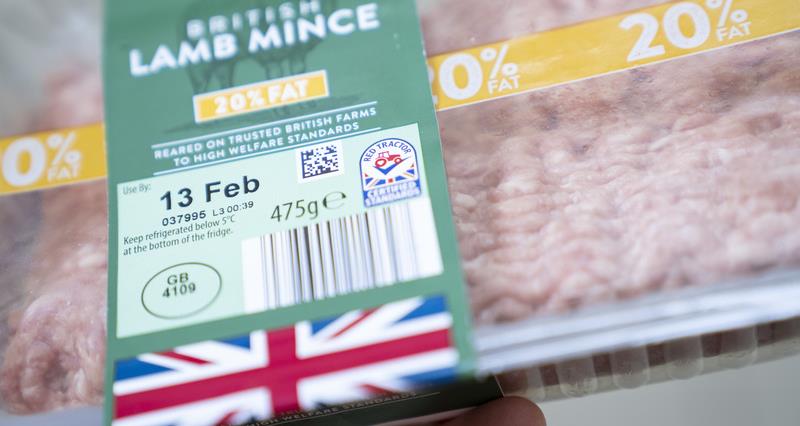 AI label inspection
 Every label and expiry date checked by AI vision
A vision system checks every package on the line: is this the right label for this order, and is the expiration date present, correct and legible? Mismatches are caught before products leave the line, every check logged per batch.
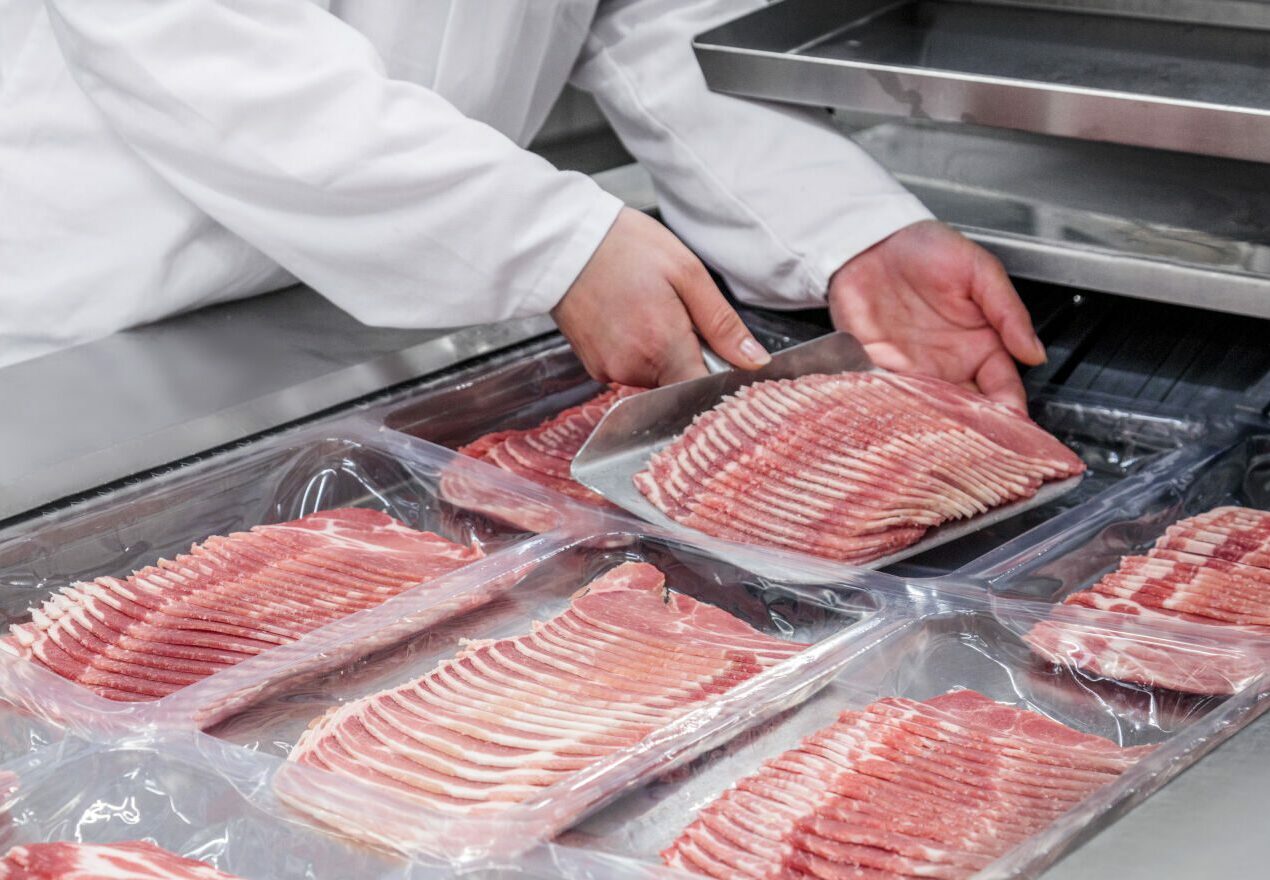 AI vision classification
 Meat products classified by AI vision
An AI vision model classifies every meat product on the line by type and appearance. Wrong or deviating products are flagged the moment they pass the camera, before they reach packaging every classification logged.
Quality early warning Scrap predicted before it comes off the line
Process parameters temperatures, pressures, cycle times feed a model that flags drift towards rejects while parts are still in the machine. Operators correct course instead of sorting scrap afterwards, and every intervention is logged against the batch.
Frequently asked questions about AI visual inspection
What is AI visual inspection?
AI visual inspection is automated quality control with cameras and a trained AI model. Every product on the line is captured and judged, at production speed. The model recognizes deviations such as scratches, dents, contamination, assembly errors and label errors, and every result is recorded per product or batch.
What is the difference between classic machine vision and AI vision?
Classic machine vision works with fixed rules and tolerances and is strong at measuring, counting and reading codes. AI vision learns from example images and therefore also recognizes deviations that are hard to capture in rules, such as scratches, contamination or natural variation. In practice both techniques are often combined in one inspection point.
What defects can AI vision detect?
Think of surface defects such as scratches, dents and discoloration, missing or misplaced components, contamination and foreign objects, label and code errors and shape deviations. With anomaly detection the model can also flag deviations from the normal picture, including defect types that have never occurred before. What is feasible depends on product, camera and lighting; we assess that during the intake.
How accurate is AI vision compared to human inspection?
Research on visual inspection shows that even trained inspectors catch about 80% of defects in repetitive inspection work, and that this percentage drops as the work goes on. A vision system judges every product the same way, all day. The accuracy the system reaches on your product depends on the application; that is why it first runs alongside your existing inspection, so you can compare the results yourself.
How many images are needed to train the model?
Fewer than many companies expect. For many applications dozens to hundreds of examples per defect type are enough, and with anomaly detection the model can learn from good products only when examples of defects are scarce. More important than the number is the origin: the model is trained on images from your own line, camera and lighting.
Does AI vision work on our existing production line?
Yes. A camera, lighting and edge computer can almost always be fitted onto an existing line, and the connection to the PLC uses standard signals and protocols. The line does not have to be replaced or shut down for an extended period.
Can we use our existing cameras?
Sometimes. Whether an existing camera is usable depends on resolution, position and above all the lighting: that largely determines whether the model can judge reliably. During the intake we assess what is already in place and what is needed.
Can the system keep up with our line speed?
Almost always. The evaluation happens locally on an edge computer, in tens of milliseconds per product and independent of the internet. During installation, the timing of triggering and ejection is matched to your line speed, so every product is checked without slowing the line down.
What happens to a rejected product?
That is up to you. The inspection point signals the PLC: the product is ejected, an operator gets an alert or the line stops. Borderline cases can be set aside for human judgment, and every reject is recorded with its image.
Does AI vision replace our quality staff?
No. The system takes over the repetitive checking work: every product, all day, the same way. People keep defining what is good and bad, judge borderline cases and use the data to improve the process. That is also where their knowledge pays off most.
How much does AI visual inspection cost?
That depends on the application: the number of inspection points, the cameras and lighting needed and the complexity of the check. That is why we start with an intake and one inspection point, so the investment and the expected result are clear before you scale further.
How quickly can a first inspection point go live?
In many cases a first inspection point is on the line within 6 to 8 weeks, including installation, training the model and a period of running alongside the existing inspection. The exact lead time depends on the application and the availability of examples.
Discover what AI vision can catch on your line
Every defect that leaves the factory costs more than a defect caught at the line. Start with one inspection point for the check that matters most right now, and see for yourself how the system performs next to your current inspection.