

Aug 4, 2026
What is Industry 4.0? How to turn your plant into a smart factory
What is Industry 4.0? Learn how the industrial revolutions led to the smart factory and how to get machine data in order as the foundation for AI in your plant.
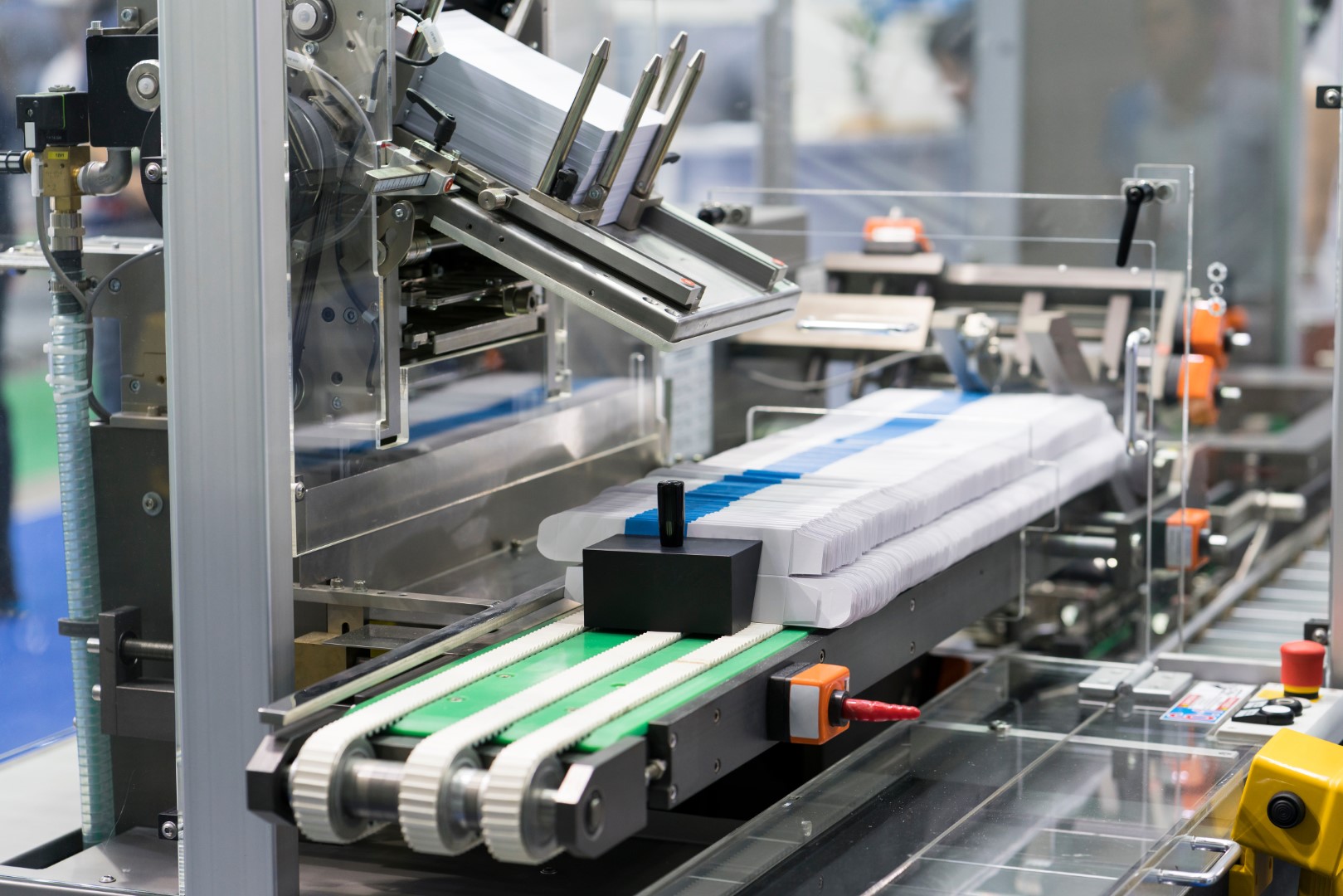
What is Industry 4.0?
Industry 4.0, also known as Smart Industry, stands for the fourth industrial revolution: factories in which machines, production processes and people are connected through data. Instead of reading values from a screen at the machine, writing numbers on paper or copying them into spreadsheets, information flows automatically from the factory floor to the people and systems that need it. The result is called a smart factory: a plant that continuously measures, learns and improves itself.
It is just as important to understand what Industry 4.0 is not. It is not about replacing machines that still run perfectly well. Most of the value comes from unlocking the data your existing installation already produces every second and putting that data to work.
To understand why so many factories are working on this right now, it helps to look back at how industry arrived at this point.
The four industrial revolutions in short
Industry 1.0: steam and mechanisation
At the end of the eighteenth century, machines driven by water and steam took over heavy work from muscle power. Production moved from workshops to factories and output per worker rose explosively for the first time in history.
Industry 2.0: electricity and mass production
Around 1900, electricity, the assembly line and standardised parts made mass production possible. Products that used to be luxuries became affordable for a wide audience. Factories grew larger, faster and far more organised.
Industry 3.0: electronics, computers and the PLC
From the 1970s onwards, electronics and computers arrived on the factory floor. The PLC replaced cabinets full of relays and made it possible to automate machines and complete lines. Systems such as SCADA gave operators a view of the process. But the data stayed close to the machine: every installation became an island that worked well on its own, yet rarely shared information.
Industry 4.0: connectivity, data and AI
Industry 4.0 is about connecting those islands. Sensors, industrial IoT, cloud and edge computing allow machines, products and systems to exchange data continuously. A digital twin provides a live view of the physical factory and AI turns years of measurements into predictions and advice. The technology exists and is affordable. For most companies, the real challenge lies in the step in between.
Where most factories are today
Most European factories do not start from zero. They have a solid base from the Industry 3.0 era: machines controlled by PLCs that have been running reliably for ten, twenty or sometimes thirty years. The data is there, but it is locked away. In a PLC that only talks to its own operator panel. In a SCADA system on an isolated network. In paper checklists and scattered spreadsheets.
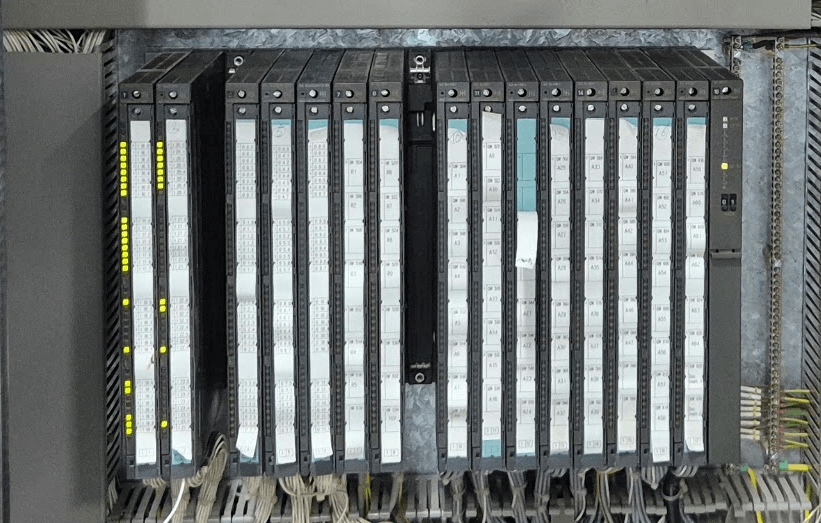
The good news: you do not have to replace this base to become a smart factory. Modern industrial automation connects to what is already in place. Existing PLCs are read out, older machines get sensors fitted afterwards and secure gateways bring the data to one place. The road to Industry 4.0 is therefore not a hardware project but a data project. That is exactly why getting your data in order is the first step.
Data in order: four steps to unlock machine data
Step 1: map your machines and data sources
Take stock of which machines you have, which PLCs and protocols they use, which sensors are present and where data currently ends up: on paper, in spreadsheets or in a local system. Then decide which questions you want answered. What does downtime cost per week? How much energy does each production line use per product? A clear question prevents collecting data without purpose.
Step 2: unlock the data from the factory floor
Read data from PLCs through protocols such as OPC UA and Modbus, and fit extra sensors on older machines without a controller where needed. Edge devices collect the data locally and forward it securely. This happens without changing the control logic: the systems are only read, so production simply keeps running.
Step 3: give data structure and context
Raw signals are not information yet. Temperature 74 means nothing without the machine, unit, product and timestamp. Bring all sources together in one shared data layer where every value has a clear name, unit and context. This concept is known as a Unified Namespace and forms the core of IT and OT integration: one common language for the office and the factory floor.
Step 4: make data available to people and systems
Data only pays off when people and systems can act on it. Think of dashboards for operators, reports for management and connections to ERP and MES. The next step is a digital twin: a live digital model of your factory. A platform such as MeshOS combines these building blocks in one environment. From that moment on, data is no longer a byproduct but infrastructure. Step by step, your plant grows into a true smart factory.
From data to AI on the factory floor
AI is exactly as good as the data you feed it. Once steps one to four are in place, the foundation is ready and AI can deliver concrete results:
- Predictive maintenance: recognise patterns before a machine fails, so you intervene on schedule instead of fixing downtime.
- Quality: link process parameters to quality results and spot deviations early, for example with machine vision and AI.
- Energy: measure consumption per machine and per product, flatten peaks and save with energy management.
- Planning and OEE: steer on real numbers instead of gut feeling.
- AI assistants: ask your factory questions in plain language, for example why line two ran slower last week.
Start small: one machine, one question, one measurable result. Then expand. Have a look at our client cases for examples of how manufacturers put these steps into practice.
Frequently asked questions about Industry 4.0
What is a smart factory?
A smart factory is a plant in which machines, systems and people continuously exchange data. Sensors and machines deliver live information, which is used to monitor and optimise processes and, increasingly, to adjust them automatically.
What is the difference between Industry 4.0 and Smart Industry?
They are two names for the same development. Industry 4.0 is the international term for the fourth industrial revolution, while Smart Industry is the name used in the Netherlands, among others by the national programme that helps companies digitalise.
Do I need to replace my machines for Industry 4.0?
No. Almost every existing installation can be unlocked with connections to the current PLCs and with sensors that are fitted afterwards. The control logic stays untouched and production keeps running while everything is connected.
Where should a factory start with digitalisation?
Start with a clear question and a small scope: one line or one machine with a measurable goal, for example less downtime or lower energy consumption. A successful first project creates support within the team and a blueprint for the rest of the factory.
When is my data ready for AI?
When it is collected automatically, stored centrally, enriched with context such as machine, product and timestamp, and reliable over a longer period. From that point on, models can learn patterns and make useful predictions.
Conclusion: the smart factory starts with data in order
Every industrial revolution started with a new technology, but in the end it was about what companies did with it. The road to Industry 4.0 does not start with buying robots or AI licences. It starts with getting your data in order: unlocking it, structuring it and making it available. After that, dashboards, digital twins and AI follow almost naturally.
Meshnex helps manufacturers with every step, from the first connection to a PLC to a complete digital twin with AI. Curious what is possible in your plant? Contact us or read more about our approach.